Researches - Department of Mineralogy and Geology

Noble gas analytical studies

Geochronology

Cosmochemistry and Cosmic Methods Research Group

Petrology, tectonics and engineering geology

Examination of the geological conditions of shallow geothermal energy utilization

Hydrogeological and geothermal researches in East Hungary

Investigation of community-distorting effects of accumulation by predatory activity in case of small vertebrates

Noble gas analytical studies

Investigation of VMS-type copper deposits in the Italian Appenines and Albania
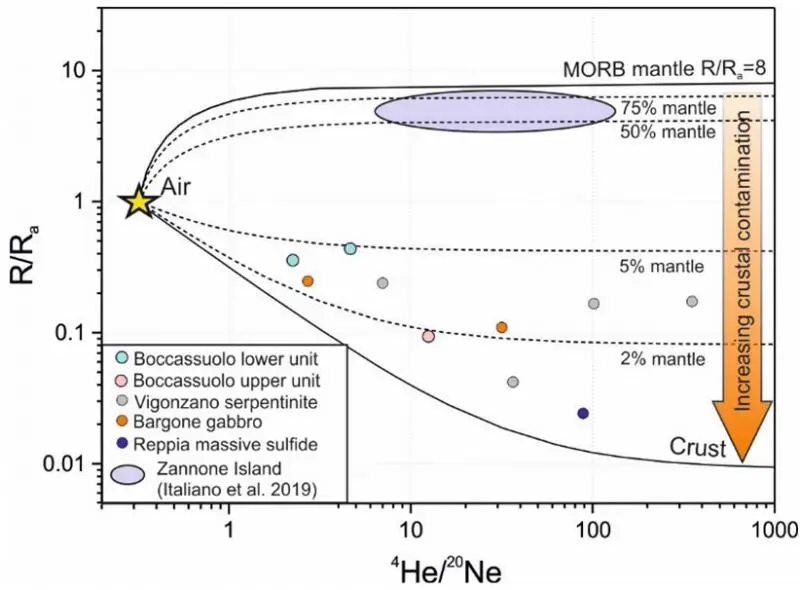
In collaboration with the Institute for Nuclear Research (Kata Temovski-Molnár, László Palcsu), the ELTE University (Gabriella Kiss, Anikó Lovász) and the Geochemical Research Institute (György Czuppon) we are performing fluid inclusion microthermometry, noble gas isotope and stable C, O, Cu, Zn isotope analyses on the volcanic massive sulfide deposits of the Appenines and the Mirdita Belt in Albania.  The aim of our studies is the better understanding of the genetics and economic potential of these deposits.

Publications:
Kiss G.B., Molnár K., Benkó Zs., Skoda P., Kapui Zs., Garuti G., Zaccarini F., Palcsu L., Czuppon Gy. (2023): Tracing the Source of Hydrothermal Fluid in Ophiolite-Related Volcanogenic Massive Sulfide Deposits: A Case Study from the Italian Northern Apennines. – Minerals 2023, 13(1), 8; https://doi.org/10.3390/min13010008 


Genetics of carbonatites
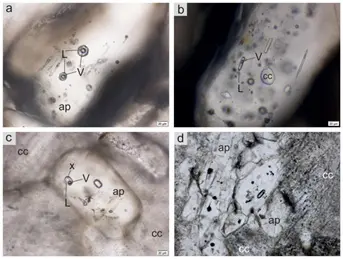
In tight collaboration with the Czech Geological Survey (Tomas Magna and Vladislav Rapprich) as well as with the Institute for Nuclear Research (Kata Temovski-Molnár) we are studying the genetics and rare earth element potential of carbonatites and related alkaline rocks (lamprophyres, alkaline basalts). Our methods are the fluid inclusion studies and noble gas isotope analyses of fluid inclusions in various minerals of these rocks. We are working on many deposits from all over the world (e.g. Sukulu and Tororo Complexes, Uganda; Sevattur and Samalpatti Complexes, India; Magnet Cove, USA; and the Phalaborwa Complex, South Africa).

Publications:
Benkó Zs., Molnár K., Magna T., Rapprich V., Palcsu L., Pour O., Čejková B., Futó I., Czuppon Gy. (2021): Combined petrography, noble gas, stable isotope and fluid inclusion chemistry of carbonatites from Uganda: Implications for the origin of the carbonatite melt in continental rift setting. – Chemical Geology, 578, 120213, https://doi.org/10.1016/j.chemgeo.2021.120213.


Geochronology

Geochronology of magmatic rock suits
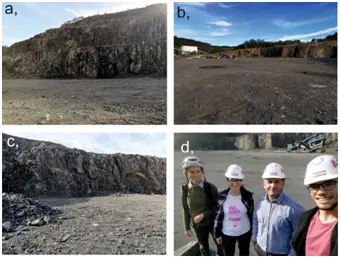
Our geochronological studies are based mainly on K/Ar radiometric age dating performed in the Institute for Nuclear Research. In the past years we have performed extensive studies on the Komló Andesite Formation (S-Hungary), on young basalt lavas from the Canari Islands, on Miocene andesitic rocks from North Macedonia, and Oligocene basalt volcanoes of the Bohemian Massif (Czech Republic). The post-magmatic activity has been dated by the analysis of hydrothermal minerals (illite, apophyllite) in the Velence Mts. (W-Hungary) or on the Deccan shield volcano (India). 

Publications:
Ottens, B., Schuster R., Benkó Zs. (2022): The Secondary Minerals from the Pillow Basalt of Salsette-Mumbai, Deccan Volcanic Province, India. – Minerals 2022, 12(4), 444; https://doi.org/10.3390/min12040444 
Somogyi D. (2023): Kora-miocén andezitek K-Ar kormeghatározása a Mecsek-hegységben. – OTDK dolgozat. DE, Ásvány és Földtani Tanszék.


Dating of low-grade metamorphism of slates by K/Ar radiometric age dating 
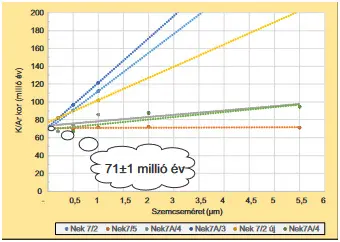
K/Ar radiometric dating of metamorphism or diagenesis of slates and sandstones is usually performed on autigenic illite crystals, that grow during the metamorphic processes. We are performing the radiometric dating under strong mineralogical control (X-ray powder diffraction) in collaboration with the University of Pécs (Tibor Németh). Our study areas are the W-Bükk Mts., the Boda Claystone Formation, the Nekézseny thrust fault, (all in Hungary), as well as the anchimetamorphic rocks of the Dinarides in Croatia and the Hegyes Mts. in Roumania.

Publications:
Mészáros E., Varga A., Raucsik B., Benkó Zs., Heincz A., Hauzenberger C.A. (2019): Provenance and Variscan low grade regional metamorphism recorded in slates from the basement of the (SW Hungary). – International Journal of Earth Sciences. 108. 1571–1593. https://doi.org/10.1007/s00531-019-01720-y


Investigation of community-distorting effects of accumulation by predatory activity in case of small vertebrates

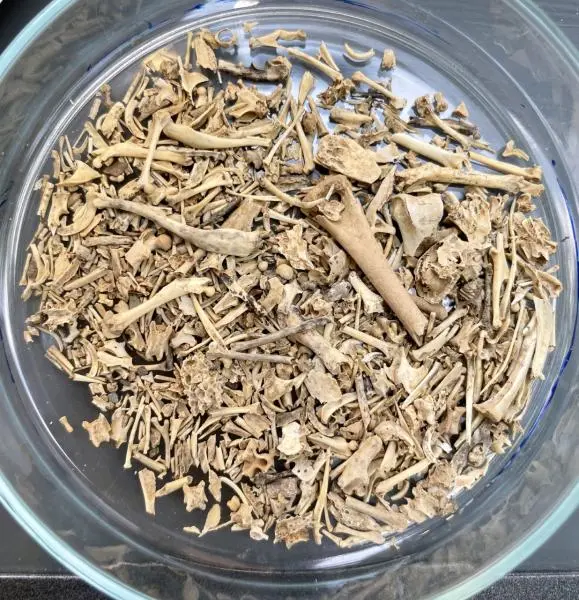
The examination of small vertebrates remains found in Quaternary terrestrial sediments highly facilitates the paleoecological research, thereby understanding the climate changes that took place during the last 2.6 million years. We can deduce the composition of the environment in those times by statistical analysis of the found fossil fauna. However, the assemblage recovered from the site does not necessarily represent the former small mammal community, as the accumulation of the found bones could derived from different processes. Predators have different ecological needs and, in consequence, have different preferences. The aim of the project is to determine the level of distortion caused by owls, that are highly responsible for the accumulation of small mammal remains by their nutrition. This is studied by taphonomic analysis of recent biological samples and fossil material.

Small vertebrates from the Upper Pleistocene sediments of the Vaskapu Cave (Bükk Mts., Hungary)


Examination of the geological conditions of shallow geothermal energy utilization

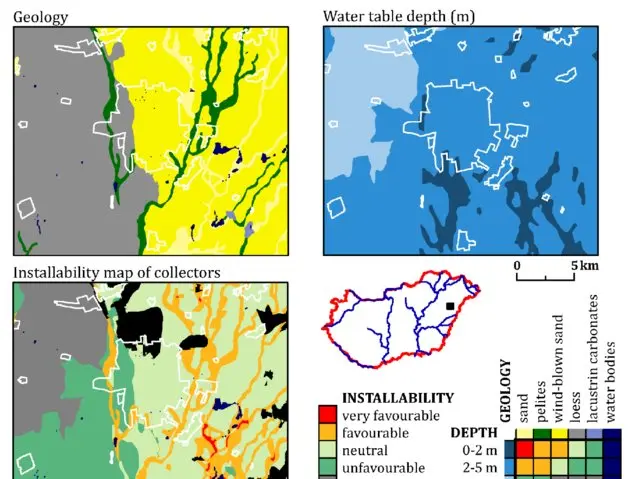
Geothermal heat pump systems can be widely installed, the sizing, economical and environmentally friendly utilization can be optimized based on the geological and environmental conditions. In the course of our research, we examine the spatial and temporal variability of the characteristics affecting installiability and production, including changes in the thermal characteristics of the heat storage medium, soil temperature analysis, and the effect of construction and operation of primary loop of heat pump system on the temperature of the geological medium.

The obtained results are suitable to specify the economic potential of heat pump energy utilization in a given area accurately, and renewable energies can support each other as a local energy supply alternative.

Related publications:
Buday, T., Bódi, E., McIntosh, R., Kozák, M.: Geoinformatic background of geothermal energy utilisation and its applications in East Hungary.
Acta geogr. Debr., Landsc. environ. ser. 10 (3-4), 145-152, 2016.

Buday, T., Lázár, I., Bódi, E., Kovács, T., Novák, T. (2019): Klímaváltozás várható hatása a talajklímára Magyarországon. In: Tájak működése és arculata. Szerk.: Fazekas I., Lázár I., MTA DTB Földtudományi Szakbizottság, Debrecen, 27-33, 2019. ISBN: 9789637064395


Installability map of soil collectors around Debrecen

Installability map of soil collectors around Debrecen


Hydrogeological and geothermal researches in East Hungary

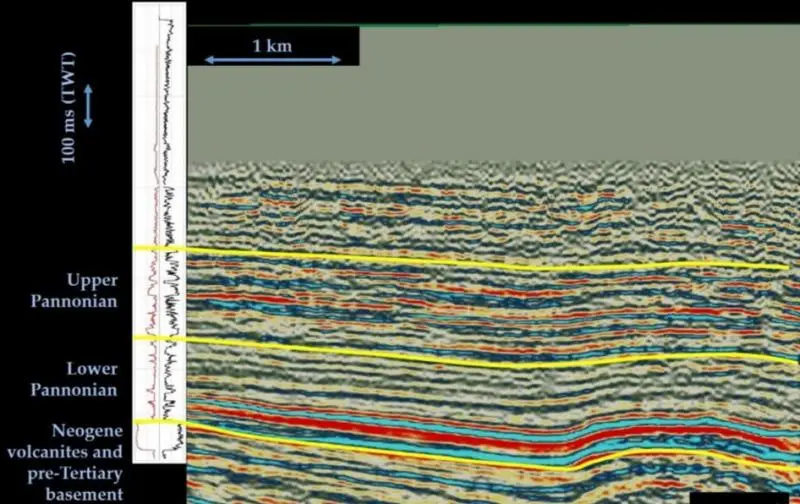
The role of groundwater is significant in terms of underground transport processes, as well as natural and artificial water and heat utilization. With the increase in geological knowledge, the process and effect of natural and artificial phenomena can be specified more and more precisely. In our research we build geological and hydrogeological models of local and subregional sample areas based on hydrogeological logs, seismic measurements, and groundwater level data sets; and also investigate the possibility of a sequence stratigraphic approach besides lithological division.

Related publications:
Buday-Bódi, E., Ali, I., McIntosh, R.W., Fehér, Zs.Z., Csajbók, J., Juhász, Cs., Radócz, L., Szilágyi, A. and Buday, T (2022): Subregion-Scale Geothermal Delineation Based on Image Analysis Using Reflection Seismology and Well Data with an Outlook for Land Use. Sustainability 14, no. 6: 3529. https://doi.org/10.3390/su14063529

Buday, T., Szűcs, P., Kozák, M., Püspöki, Z., McIntosh, R.W., Bódi, E., Bulátkó, K. (2015): Sustainability aspects of thermal water production in the region of Hajdúszoboszló-Debrecen, Hungary. Environ Earth Sci 74, 7511–7521. https://doi.org/10.1007/s12665-014-3983-1

Joint interpretation of well-logs and seismic data

Joint interpretation of well-logs and seismic data


Cosmochemistry and Cosmic Methods Research Group

In addition to meteoritic and impact geological research, we process and evaluate the measurement results of space exploration instruments (e.g., remote sensing of terrestrial or solar system formations based on satellite data).


Last update: 2025. 12. 28. 02:01